
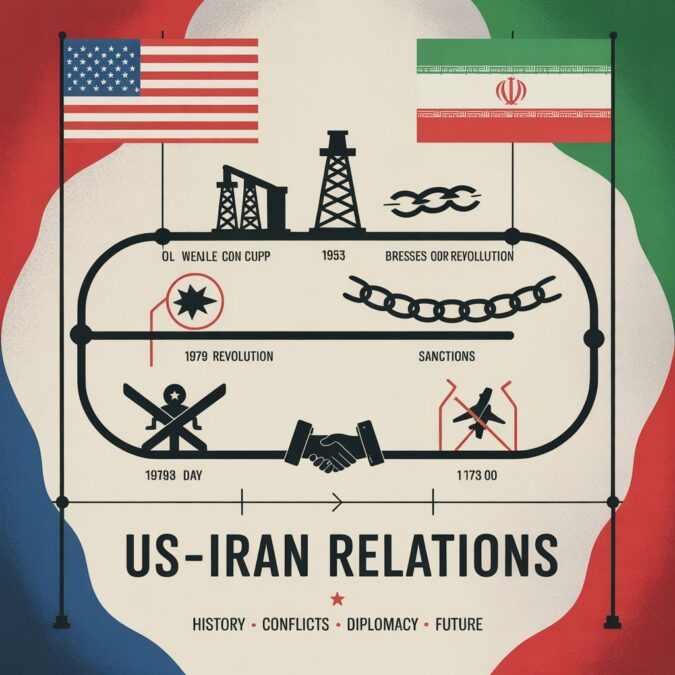

The relationship between the United States and Iran is one of the most complex and tense geopolitical dynamics in modern international politics. It has been shaped by decades of mistrust, political revolutions, sanctions, military confrontations, and failed as well as ongoing diplomatic negotiations. In recent years, tensions have escalated further due to disputes over Iran’s nuclear program, regional security concerns, and economic sanctions imposed by the United States. At the same time, both countries have occasionally returned to the negotiating table, showing that diplomacy remains possible despite deep-rooted hostility. Understanding US Iran relations is essential for grasping broader Middle Eastern stability, global energy markets, and international security concerns.
Historical Background of US Iran Relations
The history of US Iran relations dates back to the mid-20th century, when both nations maintained relatively cooperative ties. However, the relationship changed dramatically after the 1979 Iranian Revolution, which overthrew the US-backed Shah and established the Islamic Republic of Iran. The subsequent hostage crisis at the US Embassy in Tehran marked a major turning point, leading to decades of hostility.
Over time, the United States imposed multiple sanctions on Iran due to concerns over nuclear development, human rights issues, and regional military influence. Iran, in return, viewed US policies as interference in its sovereignty and regional affairs. This mutual distrust has shaped nearly every aspect of their modern interactions.
US Sanctions on Iran and Their Impact
Sanctions have been one of the primary tools used by the United States in dealing with Iran. These economic restrictions target Iran’s oil exports, banking systems, and international trade relations. The goal has been to pressure Iran into limiting its nuclear activities and changing its regional behavior.
However, these sanctions have also had significant consequences for the Iranian economy, leading to inflation, currency depreciation, and limited access to global financial systems. Despite this pressure, Iran has often sought alternative trade partners and continued its nuclear development programs, increasing tensions further.
Iran Nuclear Program and US Concerns
One of the central issues in US Iran relations is Iran’s nuclear program. The United States and its allies fear that Iran could develop nuclear weapons, while Iran insists its program is for peaceful energy purposes.
Recent intelligence assessments suggest that Iran’s nuclear capabilities remain a major concern, with estimates indicating that Iran could potentially develop nuclear weapons within a relatively short timeframe if it chose to do so.
Negotiations have taken place repeatedly, with some rounds showing limited progress but no final agreement. Diplomatic efforts continue, but disagreements over enrichment rights, sanctions relief, and verification mechanisms remain major obstacles.
Military Tensions and Regional Security
Military tensions between the US and Iran have increased significantly in recent years, especially in the Persian Gulf region. The Strait of Hormuz, a critical global oil shipping route, has become a focal point of confrontation. Disruptions in this area have raised concerns about global energy supply stability.
Recent developments include naval confrontations, missile attacks, and increased military presence from both sides in the region. These incidents highlight the risk of accidental escalation, which could draw in other regional and global powers.
Diplomatic Efforts and Nuclear Negotiations
Despite ongoing tensions, diplomatic channels between the US and Iran remain active. Indirect talks mediated by third countries have been held in various locations such as Geneva and Oman. These discussions focus on nuclear limitations, sanctions relief, and regional stability.
Reports show that while no final agreement has been reached, both sides have occasionally described talks as “constructive” or “positive,” suggesting that diplomacy has not completely collapsed.
However, major disagreements persist, particularly over uranium enrichment levels and the sequencing of sanctions removal.
Global Impact of US Iran Relations
US Iran relations do not only affect the two countries involved; they also have global consequences. Oil prices, international trade routes, and regional security are all influenced by tensions between Washington and Tehran. Any escalation can disrupt global energy markets, especially due to Iran’s strategic location near major shipping lanes.
Additionally, countries like China, Russia, and members of the European Union often play indirect roles in mediating or responding to developments in US Iran relations, making the issue a global diplomatic concern.
Future Outlook: Conflict or Cooperation?
The future of US Iran relations remains uncertain. On one hand, ongoing tensions, sanctions, and military incidents suggest continued instability. On the other hand, repeated diplomatic efforts indicate that negotiation remains possible.
The most likely scenario in the near term is continued “managed tension,” where both sides avoid full-scale war but maintain pressure through sanctions, military deterrence, and limited diplomacy. A breakthrough agreement would require significant compromise from both sides, especially on nuclear and regional security issues.
Conclusion
US Iran relations represent one of the most enduring and complicated geopolitical rivalries in the world. From revolution and sanctions to nuclear negotiations and military tensions, the relationship has gone through cycles of confrontation and cautious diplomacy. While deep mistrust continues to define interactions, both nations still recognize the importance of dialogue to avoid escalation. The future will depend on whether diplomacy can overcome decades of hostility or whether tensions will continue to shape global security and economic stability.
Frequently Asked Questions (FAQs)
1. Why are US and Iran relations so bad?
The relationship deteriorated after the 1979 Iranian Revolution, the US embassy hostage crisis, and ongoing disagreements over Iran’s nuclear program and regional influence.
2. What is the main conflict between US and Iran today?
The primary conflict centers on Iran’s nuclear program, US sanctions, and Iran’s role in regional conflicts in the Middle East.
3. Are US and Iran currently negotiating?
Yes, indirect negotiations have taken place in recent years, focusing mainly on nuclear issues and sanctions relief, though no final agreement has been reached.
4. Could US and Iran go to war?
While direct war is not the current policy of either side, military tensions and regional conflicts create a constant risk of escalation.
5. How do US Iran tensions affect the world?
They impact global oil prices, shipping routes like the Strait of Hormuz, and overall international security and economic stability.