
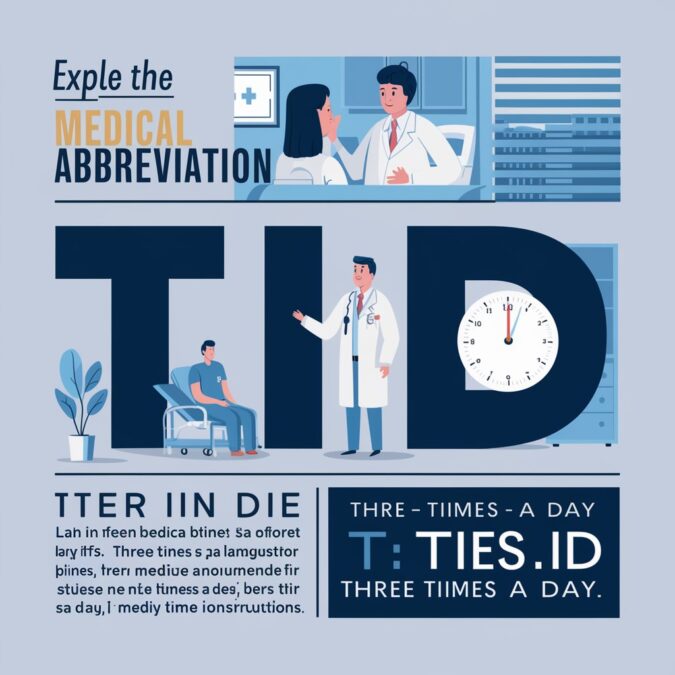

In the world of healthcare and pharmacology, clear communication is essential for patient safety and effective treatment. One of the most common abbreviations found on medical prescriptions is TID, a Latin term that stands for “ter in die,” meaning “three times a day.” This abbreviation is part of a long-standing tradition in medicine where Latin phrases are used to convey dosing instructions concisely and universally. Understanding what TID medical abbreviation means is crucial for both healthcare professionals and patients to ensure proper medication administration and adherence to prescribed treatment schedules.
The use of medical abbreviations like TID helps standardize communication between doctors, pharmacists, and nurses. However, for patients unfamiliar with Latin medical terms, these abbreviations can be confusing and may lead to medication errors if misinterpreted. This article provides a comprehensive explanation of the TID medical abbreviation, its origin, meaning, and importance in prescription terminology, along with guidance on how to follow three times a day dosing instructions safely and effectively.
What Does TID Mean in Medical Terms?
The abbreviation TID originates from the Latin phrase “ter in die,” which translates to “three times a day.” In medical practice, this instruction indicates that a medication should be taken three times within a 24-hour period, typically spaced evenly to maintain consistent levels of the drug in the bloodstream.
For example, if a doctor prescribes a medication with the instruction “Take one tablet TID,” it means the patient should take one tablet three times daily—often in the morning, afternoon, and evening. The exact timing may vary depending on the medication’s pharmacological properties, the patient’s lifestyle, and whether the drug should be taken with or without food.
The TID medical abbreviation is part of a broader system of prescription abbreviations derived from Latin, such as BID (bis in die) meaning “twice a day,” QID (quater in die) meaning “four times a day,” and QD (quaque die) meaning “once a day.” These abbreviations are widely used in medical terminology and pharmacy practice to simplify written prescriptions and ensure consistency across healthcare settings.
The Importance of Understanding Medical Dosing Abbreviations
Accurate interpretation of medical dosing abbreviations like TID is vital for patient safety and effective treatment outcomes. Misunderstanding these terms can lead to medication errors, such as taking too much or too little of a prescribed drug, which can have serious health consequences.
Healthcare professionals are trained to understand and apply these abbreviations correctly, but patients may not always be familiar with them. For this reason, pharmacists often explain dosing instructions in plain language when dispensing medications. For instance, instead of writing “TID,” a pharmacist might label the medication as “Take one tablet three times daily.”
Understanding TID dosing frequency also helps patients maintain a consistent medication schedule, which is especially important for drugs that require stable blood concentrations, such as antibiotics, pain relievers, or chronic disease medications. Consistency ensures that the medication remains effective and reduces the risk of side effects or treatment failure.
How to Follow “Three Times a Day” Dosing Instructions
When a prescription indicates TID (three times a day), it is important to space doses evenly throughout the day to maintain therapeutic drug levels. While there is no universal rule for exact timing, a common approach is to take the medication approximately every eight hours.
For example:
- First dose: 8:00 AM
- Second dose: 4:00 PM
- Third dose: 12:00 AM
However, not all medications require strict eight-hour intervals. Some may be taken with meals—morning, afternoon, and evening—depending on the drug’s absorption and potential side effects. Patients should always follow the specific instructions provided by their healthcare provider or pharmacist.
If a dose is missed, it is generally recommended to take it as soon as remembered unless it is close to the next scheduled dose. In that case, the missed dose should be skipped to avoid doubling up. Maintaining a consistent medication schedule helps ensure optimal therapeutic results and minimizes the risk of complications.
Common Latin Medical Abbreviations Related to Dosing Frequency
Latin has historically been the language of medicine, and many prescription abbreviations still in use today are derived from Latin phrases. Understanding these terms can help patients interpret their prescriptions more accurately.
Abbreviation | Latin Term | Meaning in English | Dosing Frequency |
|---|---|---|---|
QD | Quaque die | Once a day | Every 24 hours |
BID | Bis in die | Twice a day | Every 12 hours |
TID | Ter in die | Three times a day | Every 8 hours |
QID | Quater in die | Four times a day | Every 6 hours |
PRN | Pro re nata | As needed | Based on symptoms |
HS | Hora somni | At bedtime | Once daily at night |
These Latin medical terms are standardized across healthcare systems, allowing for clear communication among medical professionals worldwide. However, due to the potential for confusion among patients, many healthcare organizations now encourage writing full instructions in plain English to enhance patient safety.
The Role of Pharmacists in Medication Administration
Pharmacists play a crucial role in ensuring that patients understand dosing instructions like TID. When dispensing medications, pharmacists verify that the prescription is clear, appropriate, and safe for the patient’s condition. They also provide counseling on how and when to take the medication, possible side effects, and interactions with other drugs or foods.
For example, a pharmacist may explain that a TID medication should be taken approximately every eight hours and may advise whether it should be taken with food or on an empty stomach. They may also recommend using reminders, such as alarms or pill organizers, to help patients adhere to their medication schedule.
By bridging the gap between medical terminology and patient understanding, pharmacists help reduce the risk of medication errors and improve treatment adherence.
Patient Safety and the Risks of Misinterpreting TID
Misinterpreting TID medical abbreviation can lead to serious medication administration errors. Taking a medication too frequently can cause overdose or toxicity, while taking it too infrequently may render the treatment ineffective.
For instance, if a patient mistakenly interprets TID as “take three tablets at once daily” instead of “take one tablet three times a day,” the result could be dangerous. Similarly, irregular dosing intervals can cause fluctuations in drug levels, leading to reduced efficacy or increased side effects.
To prevent such errors, healthcare providers are encouraged to use clear, unambiguous language when prescribing medications. Patients should always ask for clarification if they do not understand a dosing instruction. Proper education about prescription abbreviations and dosing frequency is essential for promoting patient safety and effective drug administration.
Modern Trends: Moving Away from Latin Abbreviations
While Latin abbreviations like TID, BID, and QID have been used for centuries, modern healthcare systems are gradually shifting toward plain-language instructions to minimize confusion. Organizations such as the Institute for Safe Medication Practices (ISMP) and the Joint Commission recommend avoiding Latin abbreviations in prescriptions whenever possible.
Instead of writing “TID,” healthcare providers may write “Take one tablet three times daily.” This approach enhances clarity, especially for patients who may not be familiar with medical terminology. Despite this shift, understanding traditional abbreviations remains important for healthcare professionals and students in medicine, nursing, and pharmacy.
Conclusion
The TID medical abbreviation, derived from the Latin term “ter in die,” means “three times a day” and is a fundamental part of medical dosing instructions. It guides patients and healthcare providers in maintaining consistent dosing frequency to ensure effective treatment and minimize side effects. Understanding prescription abbreviations like TID is essential for safe medication administration and adherence to prescribed therapy.
While Latin medical terms have historical significance, modern healthcare emphasizes clear communication to enhance patient safety. Patients should always seek clarification from their healthcare provider or pharmacist if they are unsure about any dosing instructions. By combining accurate medical terminology with patient education, healthcare professionals can ensure that medications are used safely, effectively, and responsibly.
Frequently Asked Questions (FAQ)
1. What does TID mean in medical terms?
TID stands for “ter in die,” a Latin phrase meaning “three times a day.” It indicates that a medication should be taken three times within a 24-hour period.
2. How often should I take a TID medication?
A TID medication should be taken approximately every eight hours, though exact timing may vary depending on the drug and your doctor’s instructions.
3. What is the difference between BID and TID?
BID means “twice a day” (every 12 hours), while TID means “three times a day” (every 8 hours). Both refer to dosing frequency in medical prescriptions.
4. Can I take all three TID doses at once?
No. TID means the doses should be spaced throughout the day to maintain consistent drug levels. Taking all doses at once can cause overdose or side effects.
5. What should I do if I miss a TID dose?
If you miss a dose, take it as soon as you remember unless it’s close to your next scheduled dose. Do not double up on doses.
6. Why are Latin abbreviations used in prescriptions?
Latin was historically the universal language of medicine. Abbreviations like TID, BID, and QID were used for consistency across regions and languages.
7. Are Latin medical abbreviations still used today?
Yes, but many healthcare providers now prefer plain English instructions to reduce confusion and improve patient understanding.
8. What are some other common prescription abbreviations?
Common abbreviations include QD (once daily), BID (twice daily), QID (four times daily), and PRN (as needed).
9. How can I remember to take my TID medication on time?
Use reminders such as phone alarms, medication apps, or pill organizers to maintain a consistent dosing schedule.
10. Why is understanding TID important for patient safety?
Knowing that TID means “three times a day” helps prevent dosing errors, ensures proper medication timing, and supports effective treatment outcomes.